Headaches and migraines are among the top reasons patients come to Al Hateem Hijama & Ruqyah Centre in G-10, Islamabad. Many have tried painkillers for years and want a natural option alongside their doctor’s care. Hijama (wet cupping) is a Sunnah therapy that many patients report helps them feel lighter and get fewer, milder headaches. Here is what to know before you book.
Can hijama help with headaches and migraines?
Hijama is traditionally used for head pain. The Prophet ﷺ had hijama on his head himself (Sahih al-Bukhari 1836), and he would have hijama on top of his head and between his shoulders (Sunan Abi Dawud 3859). Today, many patients with tension headaches and migraines report less pain and more relaxed neck and shoulder muscles after sessions.
Results differ from person to person. Hijama is complementary care: it may help, but it does not replace a diagnosis or treatment from your doctor.
Tension headache or migraine?
- Tension headache: a tight band around the head, often with stiff neck and shoulders, linked to stress, long screen time and poor posture.
- Migraine: throbbing pain, often on one side, sometimes with nausea, sensitivity to light or sound, or visual “aura”.
Both types are common among our patients. Tension headaches, in particular, are often linked to tight upper back and neck muscles, which is exactly where cupping works.
Which points are treated?
For headaches, the practitioner usually chooses points on:
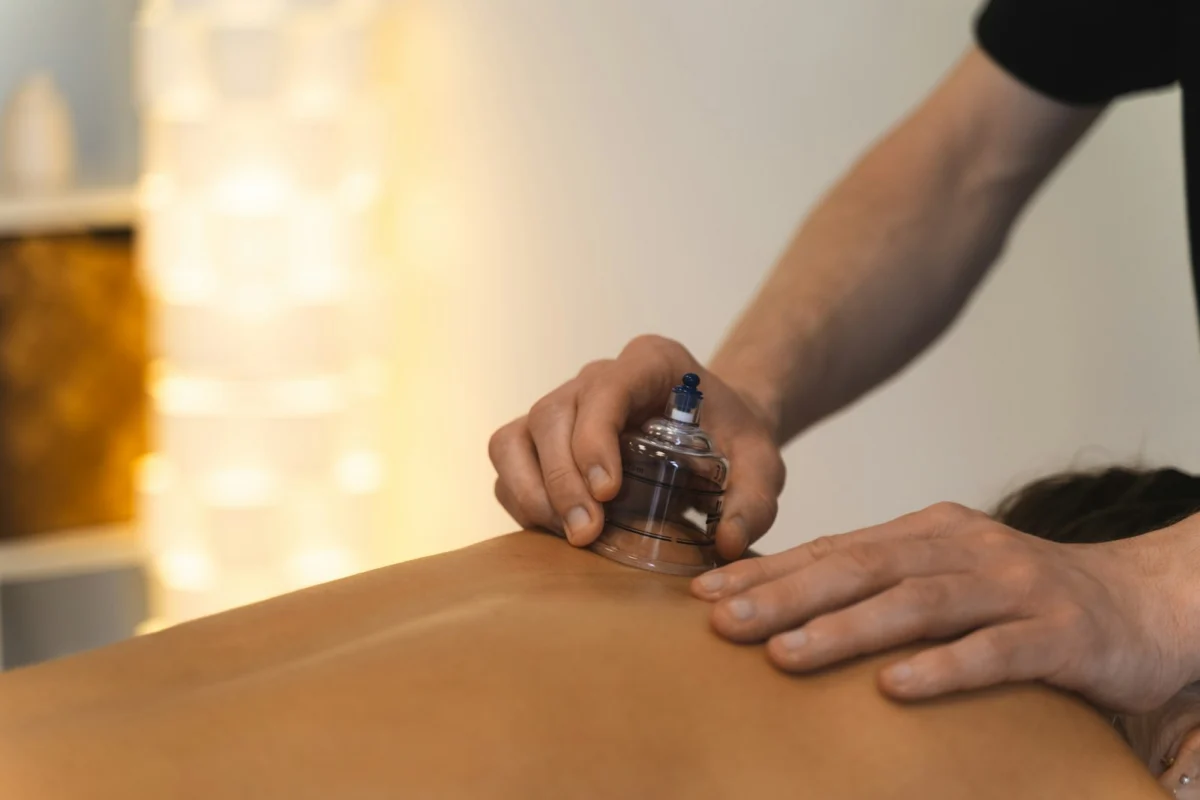
- The upper back, between the shoulder blades
- The base of the neck and the shoulders
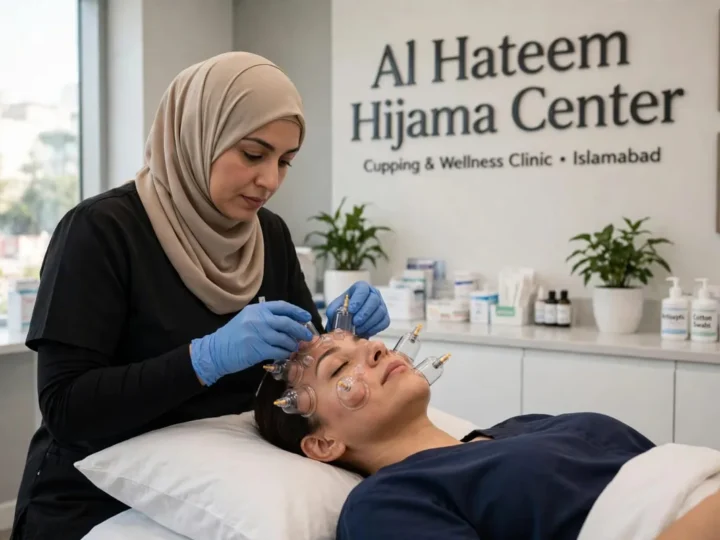
- The head, when suitable (Sunnah head points)
We choose the points after a short consultation about your headaches, your health and your medicines. If you would prefer not to have head points, we can work on the neck and upper back only.
What happens during the session?
- Consultation: how often your headaches come, triggers, and any medical conditions.
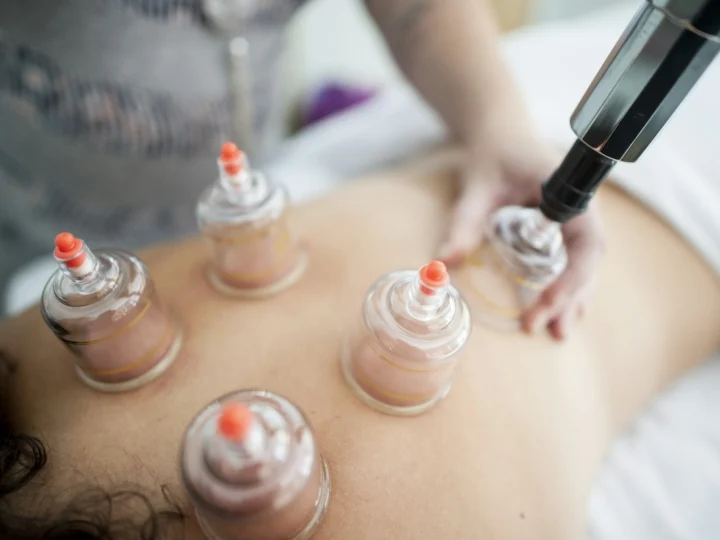
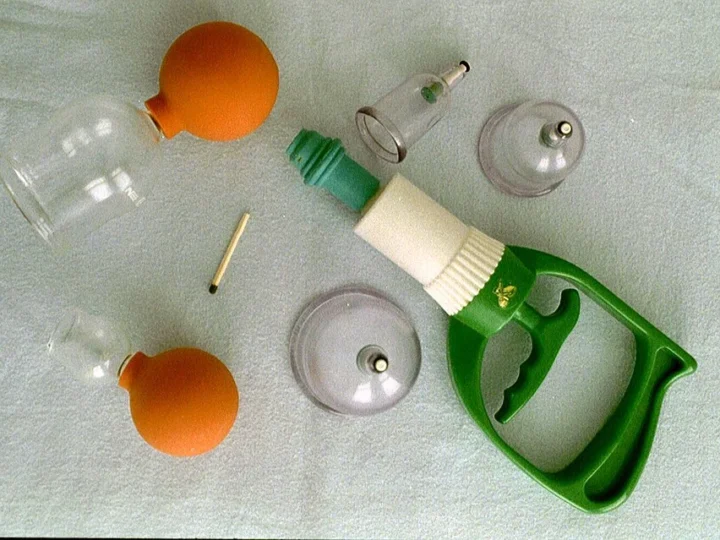
- Cupping: new, single-use cups create gentle suction for a few minutes.
- Hijama: tiny, superficial cuts with a sealed sterile blade, then the cups are applied again.
- Aftercare: the skin is cleaned and pure olive oil is applied.
Many patients choose the General Body Hijama package (17 cups, about 30 minutes, Rs 4,500, with free dry cupping), which covers the upper back, neck and Sunnah points. See all options on our treatments and prices page.
How many sessions will I need?
Some patients feel a difference after one session. For long-standing headaches, we usually suggest two or three sessions a few weeks apart, then a maintenance session every one to three months. Keeping a simple headache diary (dates, pain level, triggers) helps you see whether hijama is working for you.
Who should see a doctor first?
Please see a doctor before hijama, or urgently, if you have:
- A sudden, very severe headache (“the worst ever”)
- Headache with fever, stiff neck, confusion, weakness or difficulty speaking
- Headache after a head injury
- A new headache pattern after age 50
- Pregnancy, blood-thinning medicines, anaemia or a bleeding disorder
These need medical assessment first. Tell us about all your medicines at your consultation.
Tips to reduce headaches between sessions
- Drink enough water through the day.
- Keep regular sleep and meal times.
- Take short screen breaks and stretch your neck and shoulders.
- Limit too much tea or coffee, and avoid skipping meals.
- Note your triggers and avoid them where you can.
After your session, follow our before and after care guide for the best results.
When is the best time?
Hijama can be done on any day when there is a need. For regular sessions, many patients choose the Sunnah days, the 17th, 19th and 21st of the Islamic month. See the upcoming Sunnah hijama dates, and read why in our article on Sunnah days for hijama.
Frequently asked questions
Is hijama on the head painful?
Most patients feel only mild pressure from the cups and a light scratch. The head area is cleaned carefully and the cuts are very shallow.
Will I need to shave my head?
For Sunnah head points, a very small area may need to be cleared. If you prefer not to, we can treat the neck and upper back instead.
Can I take my migraine medicine after hijama?
Yes, continue the medicines your doctor prescribed. Hijama works alongside them. Tell us if you take blood thinners.
Is a female practitioner available?
Yes. Dr. Faryal (DPT) treats female patients with full privacy, at the clinic or at home.
If headaches are affecting your life, book a hijama session at our clinic in G-10 Markaz, Islamabad, or ask for a home visit anywhere in Islamabad and Rawalpindi.
This article is for general information. Hijama is complementary care and does not replace advice from your doctor.